This post contains affiliate links. If you buy through them, I may earn a small commission at no extra cost to you. I only recommend gear I’d trust off-grid myself. Read my full disclosure.
When my wife and I decided to power our home in the Belize jungle with solar, we knew almost nothing about it. Eighteen months later, we were making our own electricity. Here’s how we did it, the seven questions you have to answer before you buy anything, and what I’d change if I built it again today.
How an off-grid solar system works
The basic setup is simpler than it looks. Solar panels collect energy from the sun and send it through wiring to a battery bank, where it’s stored. An inverter then converts that stored DC power into standard AC power and feeds it to your breaker box, so your house runs like any other.
One fact that may affect your layout down the road: low-voltage DC loses a lot of power over distance. A 24V system pushes high current through its cables, and the longer the run, the more energy you lose as heat.
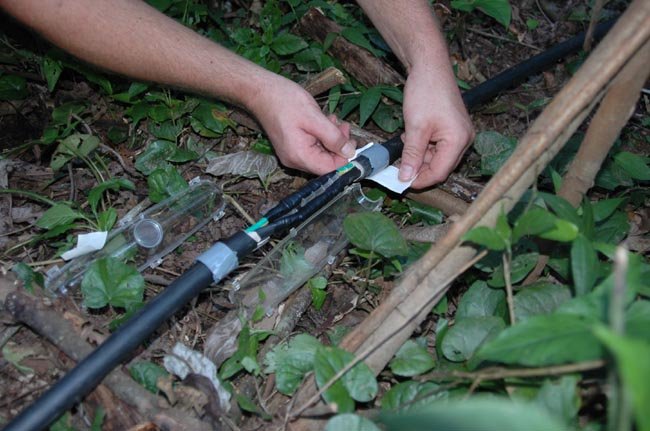
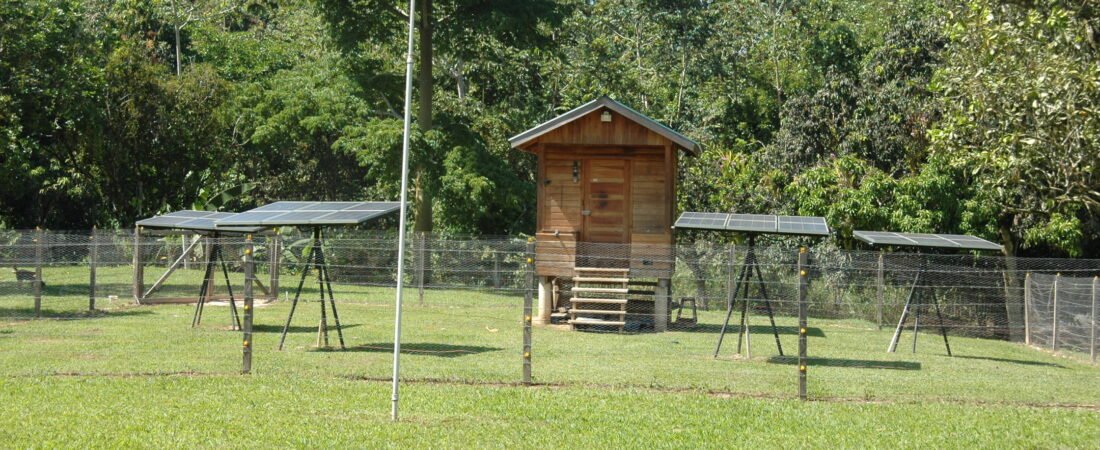
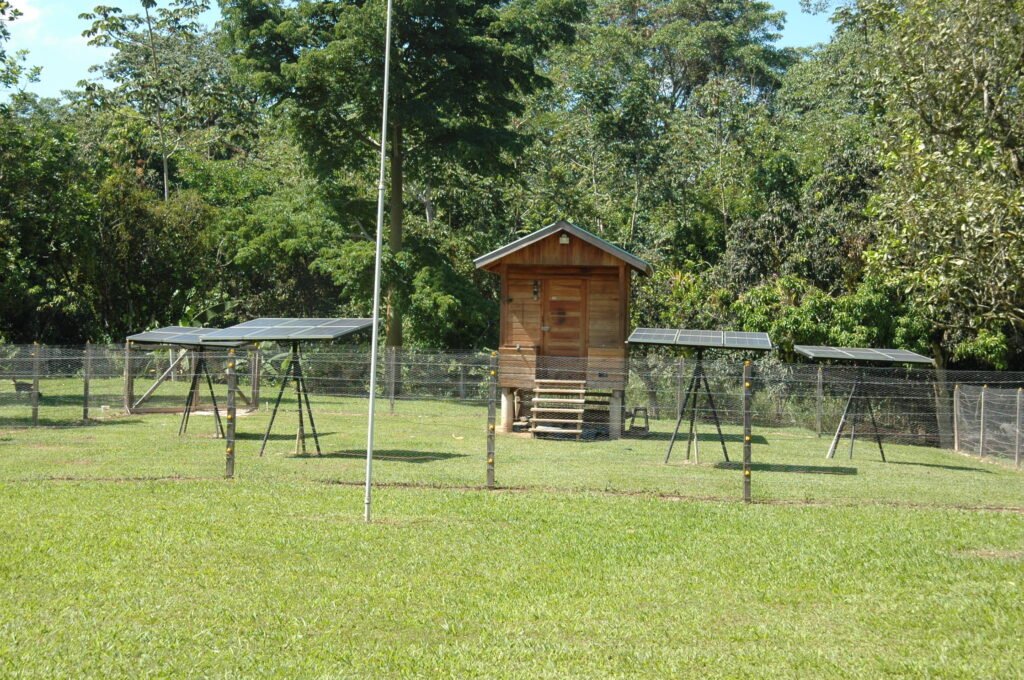
We learned to plan around this early. Our power shed sat in the orchard, where the panels got the best sun, and our house site was about 1,200 yards through the jungle from it. Sending 24V DC that far would have wasted a huge amount of power. Instead, we kept the batteries and inverters together in the shed, converted to 120V AC there, and ran it to the house on very heavy-gauge wire. Even at 120V, a run that long needs thick cable to keep the voltage drop down.
Cable that size isn’t cheap, and it isn’t easy to find in Belize either. We bought ours from the local Mennonite community, who, as far as I know, had picked it up as leftover stock from a city project in Europe. Off-grid, you learn to ask around before you order anything.
If your panels and batteries have to sit far from where you live, do the same: keep the DC side short and send AC over the long run.
The 7 questions to answer before you buy anything
1. 12V, 24V or 48V?
Your system voltage shapes everything else you buy. We went with 24V, because our setup was medium-sized. As a general guide, 24V suits systems from roughly 1,500 to 5,000 watts.
2. What do you actually need to power?
Make a list of every electrical item you want to run, then measure it. Don’t guess. We bought a Kill-A-Watt meter and tested everything in the house. Count the surge load (the jolt when a fridge or pump starts up) and the phantom loads (devices drawing power even when “off”), not just normal use.
3. How much power do you need to generate?
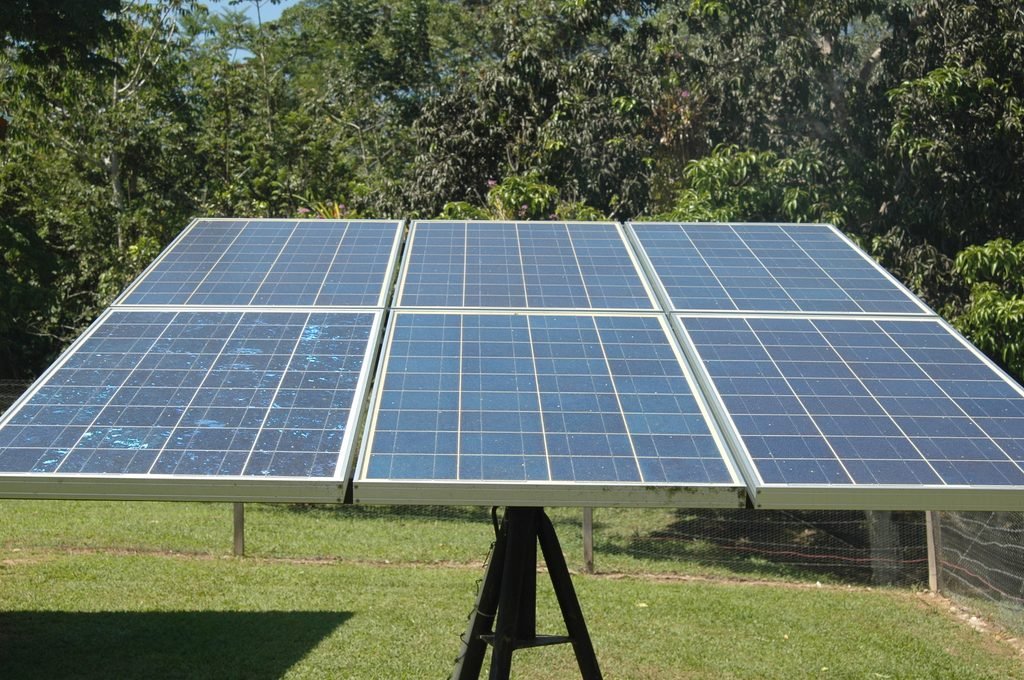
Our array was twenty-four 100-watt panels, 2,400 watts in perfect conditions. In the jungle, “perfect conditions” don’t happen every day, so size for the cloudy stretches, not the sunny ones. We knew we’d have to deal with the rainy season, and in the end, even on cloudy days, our system produced more than enough for our needs.
4. How many batteries, and what kind?
We ran twenty-four 12V, 200Ah deep-cycle marine batteries. That’s about 57 kWh on paper, but with lead-acid you only want to use about half of that to keep them healthy.
A weekly chore was going through every battery and topping up the water level, with distilled water only. Even with that care, in our conditions they lasted an average of 4 to 6 years.
One safety note: flooded lead-acid batteries give off hydrogen gas while charging, and it’s explosive. Your battery shed needs good ventilation, and you never want sparks or open flames near the bank.
5. Which inverter, and what size?
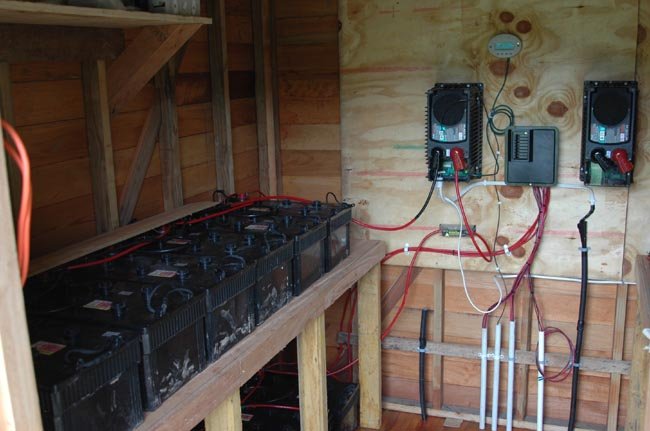
We used two OutBack VFX3524 inverters, and they worked great. One tip: if you go with OutBack, get the Mate controller too. Without it, you can’t change the inverter’s settings, and it shows the battery level, the load currently in use and other really useful info.
6. Do you need a charge controller?
We started without one. We tried a dump system, sending the extra power to a dump load, and it didn’t work out all that well. So we ended up turning panels off by hand throughout the day as the battery bank filled up.
Today, I’d always use one. A modern MPPT charge controller protects your batteries from overcharging, does that job automatically, and gets noticeably more power out of your panels. These days, a lot of inverters have the MPPT charge controller built right in, like the EG4 6000XP inverter, so one box does both jobs.
7. How many breaker boxes?
We used standard, easy-to-find breaker boxes: one each for the house, the power shed and the garage.
The 8th thing: an expert you can call
Wherever you buy your components, make sure they offer real tech support. Email is fine, but an active online forum or user group is even better. Depending on where you live, many alternative energy stores will also do the installation for you.
How we did our homework
- Magazines and catalogues. The good ones explain the technology, not just the prices.
- The internet. Obviously, but read widely.
- Forums. Follow a few for a while before joining one; you’ll learn which ones fit your needs.
- Visit a working system. Nothing beats seeing someone’s setup running in real life.
- Visit an alternative energy store. Nothing replaces an in-person conversation, and some will match online prices.
What I’d do differently today
- Lithium (LiFePO4) instead of lead-acid. A longer lifespan, no weekly watering, no gassing, and you can use far more of the capacity. The EG4 PowerPro battery is a good example: 14.3 kWh in a single battery that can sit outdoors, and it’s heated for colder climates.
- An MPPT charge controller from day one. No more turning panels on and off by hand.
- I’d stick with OutBack. To my knowledge, our inverters are still running today. If I were replacing them or building another system, it would be OutBack all the way. They’re tough and reliable. If I were building today, I’d take a hard look at the OutBack SkyBox, an all-in-one 5kW inverter and charger. A1 Solar Store has a few on clearance right now, so they may not last.
- Built for the climate. Our OutBack gear was never affected by the heat or humidity. We built the power shed on 4-foot concrete columns, so flooding was never an issue, and between the ventilation and the battery gases, we never had problems with insects or animals moving in.
Bottom line
We started knowing nothing, and building it ourselves was one of the most rewarding things we’ve done. If you do your homework and ask the right questions, you can do it too.
Thanks to my wife, who documented our build as it happened back in 2008 on her blog, TropiCat’s Blog.