This post contains affiliate links. If you buy through them, I may earn a small commission at no extra cost to you.
I only recommend gear I’d trust off-grid myself. Read my full disclosure.
Understanding Off-Grid Living
Off-grid living is rapidly gaining popularity as more people seek independence from traditional utility sources. It focuses on sustainable practices, using natural resources, and rethinking our lifestyle choices. A self-reliant lifestyle allows individuals to live harmoniously with nature while promoting environmental consciousness. Something very important you need to keep in mind is the environment you will reside in. In my case, it was the Central American jungle. Four months of the year, it’s 100% humidity.
The Role of Solar Power in Off-Grid Living
One of the fundamental components of an off-grid lifestyle is solar power. By harnessing sunlight, solar energy can significantly reduce dependence on fossil fuels, which can be expensive and noisy. Solar generators and portable power stations offer reliable solutions for energy needs, allowing you to power essential appliances and devices while enjoying life’s conveniences in remote areas.
Choosing the Right Product for Your Off-Grid Experience
When planning your self-reliant lifestyle, it’s essential to choose the right equipment. Investing in quality gear can make a significant difference. Keep in mind, you get what you pay for! If you are truly off-grid, chances are, you can’t just run out to buy a replacement. Look for product comparisons and gear guides to help you navigate options like solar generators and off-grid equipment. Focus on durability, efficiency, and user reviews to make informed decisions that align with your off-grid ambitions.
Anker SOLIX S2000 (2,010Wh / 1,500W)
A big-capacity unit for home backup or a small cabin. It uses LFP (lithium iron phosphate) cells, which Anker rates for 10,000 charge cycles, and Anker says it can keep a fridge running for up to 35 hours. It’s also smaller than most 2kWh units, which matters if space is tight. This would be a great starting point and multi-use.
Best for: home backup and running a fridge through an outage.
BLUETTI Elite 200 V2 + 2×200W Solar Panels
A complete kit: roughly 2kWh of LiFePO4 storage plus two 200W panels, so you can start charging from the sun on day one without hunting for compatible panels. BLUETTI rates the battery for a 17-year lifespan. A perfect set-up for a beginner, portable enough to move between sites.
Best for: anyone who wants the power station and the solar in one purchase.
ECO-WORTHY 10kW Off-Grid Solar Kit (2,340W Panels + 9.6kWh Lithium)
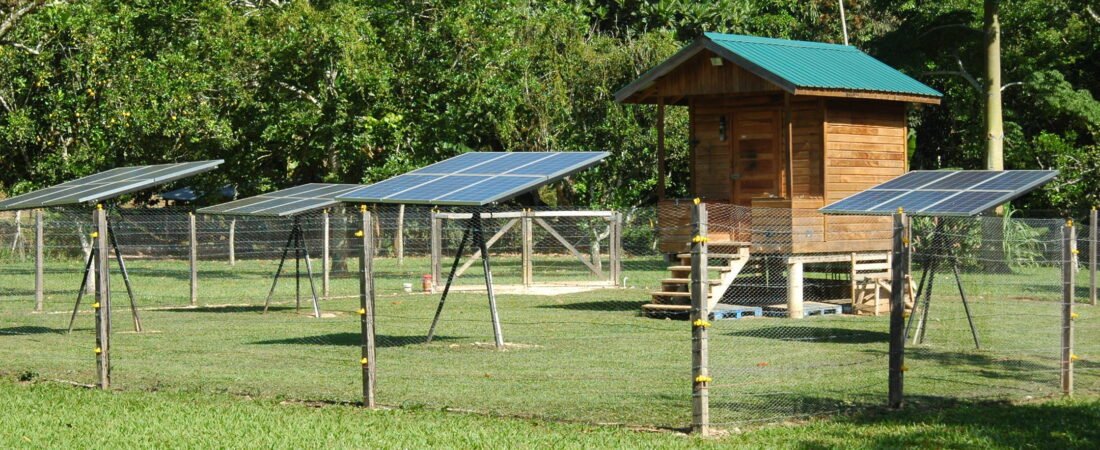
A full home system, and the closest thing to what I’d build today. It comes with twelve 195W panels (2,340W, similar to what I had in Belize), a 10kW inverter with 120V/240V output, and two 48V 100Ah lithium batteries. ECO-WORTHY rates it at about 9.36 kWh per day with good sun, enough for a fridge, AC, power tools and the usual household loads. The inverter is UL 1741 certified, and the batteries are LiFePO4, so there’s no weekly watering like with my old lead-acid bank. The great part about this set is that it is totally complete; everything you need is already included.
Best for: cabins, homesteads and anyone ready to go fully off-grid or set up serious home backup.